
How Do You Organize a Shared Home Office Once the School Year Is Underway?
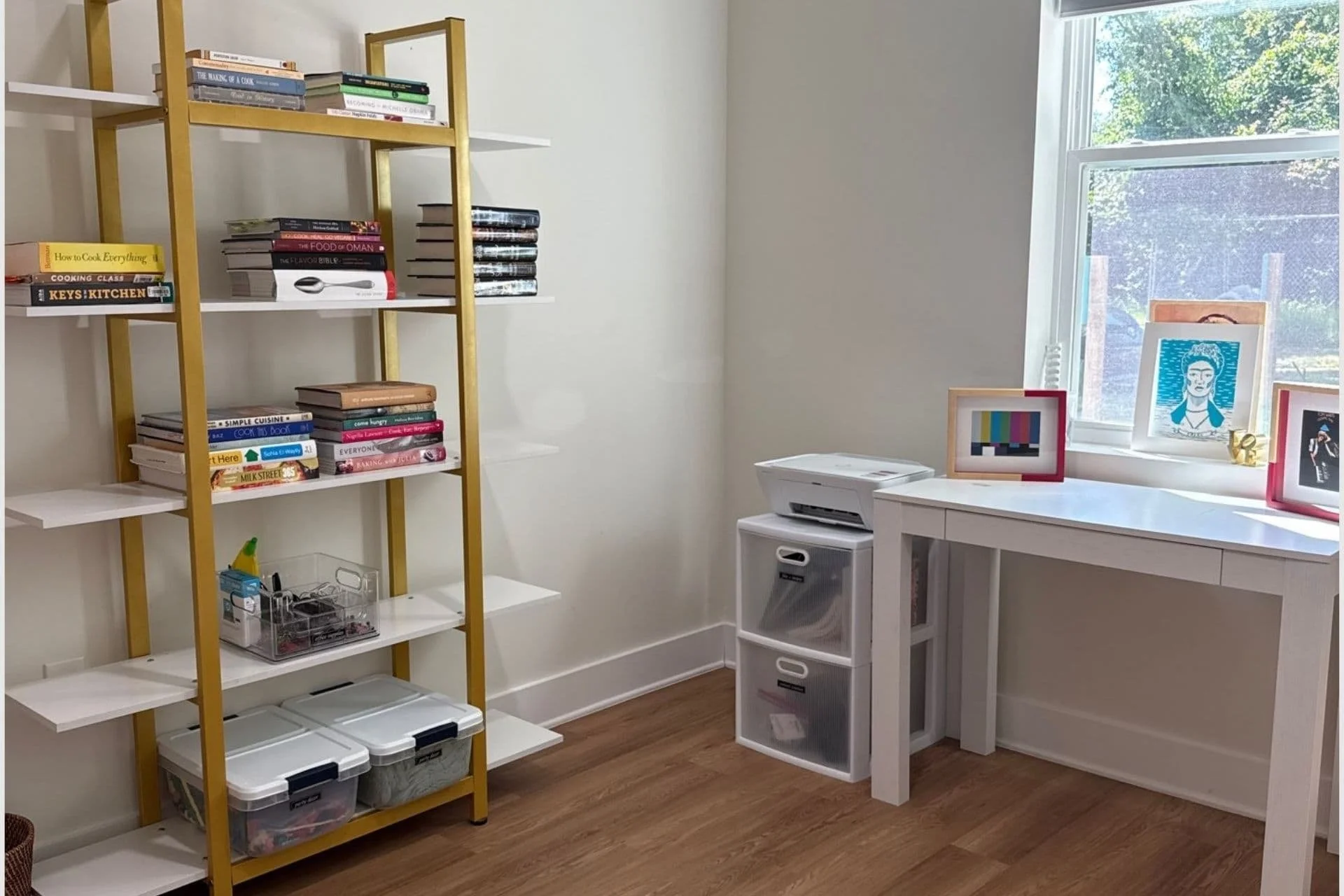
Organizing a shared home office for back-to-school season means creating clear zones for work and school needs, getting a paper management system in place before the daily flood takes over, and leaving enough breathing room in your setup to handle what shows up mid-year. The families who get this right don't just survive the school year. They move through it without the space working against them.
Schools across the greater Wilmington area returned on August 24th, which means by the time September arrives, the school year is already a week in, and the evidence is everywhere. The desk that was quiet all summer is buried under permission slips, supply bags, and homework that multiplied overnight. It's usually not the office itself that's the problem. It's that nobody planned for it to do two jobs at once.
Why Back-to-School Season Hits Home Offices So Hard
A lot of it comes down to volume. According to the National Retail Federation, total K-12 back-to-school spending is expected to hit a record $43.3 billion this year. That means school supplies, forms, and new gear have been flowing into homes since July, and with school already underway since late August, the accumulation in most home offices is real and growing. For most households, it lands on whatever surface is closest, and that surface is usually the home office desk.
The paper trail starts the moment school does and doesn't let up. Permission slips, graded assignments, school calendars, and fundraiser forms arrive in waves, and without a system in place to manage them, the volume wins.
What Should You Tackle First in a Shared Space?
Start by deciding what belongs in the room long-term versus what's just passing through. A home office that's shared with a child’s schoolwork requires a clear line between work territory and school territory, even if those two zones are two feet apart. Once that line exists, even loosely, it's much easier to keep backpacks and binders from slowly taking over the whole desk.
This distinction doesn't have to be elaborate. A labeled shelf, a dedicated drawer, or a single bin that belongs to the kids is enough to give school supplies a home that isn't your workspace. The goal is clarity, not perfection.
How To Handle Overlapping School and Work Supplies
Color coding or simple labeled bins go a long way here. If pens, paper, and folders serve both work and school needs, a shared supply zone can work well. But items that are school-specific, like flashcards or a particular binder system, do better in their own spot so they don't migrate into paperwork you need for your job.
The goal isn't total separation. It's knowing where to look without guessing, and being able to reset the space in ten minutes at the end of the day when both work and homework are done.
Does a Cluttered Desk Affect Focus?
Yes, and the research is detailed on this. A study from the Princeton University Neuroscience Institute, published in the Journal of Neuroscience, found that when multiple objects compete for attention in the visual field, the brain has to work harder to process what's relevant, which directly limits focus and task performance. A desk buried under mail, supplies, and half-finished projects is genuinely working against whoever's sitting at it, whether that's you on a work call or a kid trying to finish math homework.
This isn't just an adult problem. A survey of 1,000 office workers by DeskTime found that 90 percent believed a cluttered workspace negatively impacted their productivity and mood. The same principle applies to kids doing homework. The environment shapes the focus, and a chaotic desk makes every task feel harder than it needs to.
What Storage Works Best for Papers and School Forms?
Paper is the fastest-growing category once school starts. A simple vertical file sorter or a labeled accordion folder by category tends to work better than a single catch-all inbox, because it forces a quick decision about what needs action versus what can be filed or tossed.
Three categories cover most of what comes home: needs a signature, keep, and toss. A labeled spot for each one makes daily sorting take seconds instead of building into a pile that takes over the desk by Wednesday. The goal is a system simple enough that everyone in the house uses it, not just the person who set it up.
How to Build a System That Survives the Whole School Year
The systems that hold up through the whole school year are the ones built with every month in mind, not just the first few weeks. That usually means leaving breathing room in bins and drawers for the supplies and paperwork that show up mid-year, rather than filling every inch on day one. A system with no slack tends to break down by October.
Build in a quick weekly reset, even just ten minutes on a Sunday evening. Catching small buildup weekly is far easier than dealing with a fully overwhelmed space once a semester. The families whose offices stay organized through June are the ones who lock in that reset habit early and don't let it slide.
Ready to Set Up a Space That Works for Your Whole Household?
At Kristin + Co Organizing, we work with families across Wilmington, Leland, Hampstead, and the surrounding Cape Fear coast to set up home offices, shared spaces, and storage systems that hold up once the school year gets going. Whether you need a full reset now that things are underway or just a smarter system for the paper that's already taking over, we're here to help.
Schedule a consultation today and let's build a setup that works for everyone in your house, from the first day of school through the last.
Frequently Asked Questions
-
A quick ten-minute reset at the end of each day keeps things from sliding. Catching small buildup daily is far easier than tackling a space that's fully overwhelmed. Sunday evenings are a good time to do a slightly longer reset and prep the space for the week ahead.
-
A labeled folder system with three categories works well: needs a signature, keep, and toss. Having a dedicated spot for incoming papers means nothing sits in a pile waiting to be dealt with. The key is making the decision immediately rather than letting it stack up.
-
When space allows, yes. Even a single shelf, drawer, or bin for the kids keeps school materials from spilling into adult work areas and gives children a consistent spot to find their own supplies. It also makes cleanup faster because everyone knows where things belong.
-
Less than most people think. The key isn't square footage; it's clarity. Clear zones, labeled storage, and a consistent daily reset can make even a small shared space function well for both work and school needs throughout the year.
-
Shared spaces like this are one of the more common challenges families bring to us as the school year ramps up. Reach out to schedule a consultation, and we'll build a system tailored to how your specific household uses the space, not a one-size-fits-all setup.