
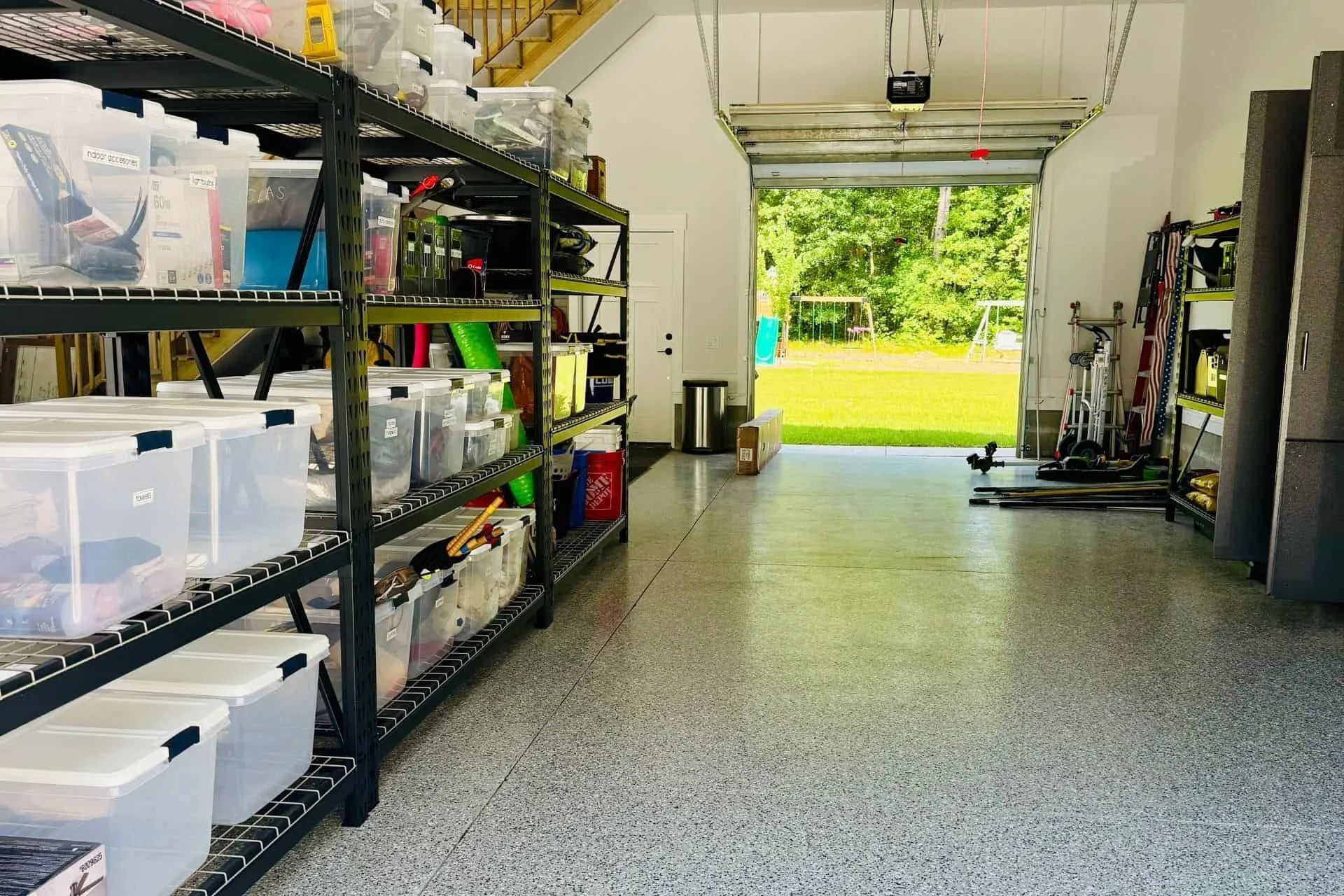
The garage is the hardest space in the house to keep organized because it's asked to do more jobs than any other room, has no natural organizing structure built into it, and becomes the default destination for everything that doesn't have a home anywhere else. Unlike a kitchen or a bedroom, the garage has no inherent system. It's an open box that collects whatever the household doesn't know what to do with, and without a deliberate plan, it stays that way.
The good news is that the garage isn't hard to organize because it's hopeless. It's hard because most people approach it without a system designed for what the space is being asked to do. Build the right system, and a garage stays organized the same way a well-designed kitchen does: almost automatically.
Why Do So Many People Struggle With Garage Organization?
The numbers tell the story clearly. A survey by the National Association of Professional Organizers found that 50 percent of homeowners name the garage as the most disorganized area of their house. And according to a 2024 Craftsman Garage Works Survey, 78 percent of homeowners planned to declutter and organize their garage, yet only 11 percent say they're satisfied with their garage as it currently stands. That gap between intention and outcome tells you something important: the problem isn't motivation. It's that most garage organization attempts don't address the root causes of why garages fall apart in the first place.
The garage is uniquely vulnerable to disorganization for a few specific reasons. It's the room with the lowest barrier to entry for clutter. Anything that doesn't have a home inside the house ends up in the garage. Seasonal items, sports equipment, tools, holiday decorations, items waiting to be donated, things you're not ready to deal with yet. The garage absorbs all of it without complaint, until it can't anymore.
What Makes the Garage Different From Every Other Room?
Every other room in your home has a defined purpose that creates a natural organizing logic. The kitchen holds food and cooking equipment. The bedroom holds clothes and sleep essentials. Even a junk drawer has some loose sense of what belongs there.
The garage has no equivalent logic. It's asked to hold vehicles, lawn equipment, tools, sporting goods, seasonal decorations, overflow storage from every other room, and in many coastal households, beach gear, fishing equipment, kayaks, and hurricane supplies. That's not one room's worth of stuff. That's the overflow of an entire household's worth of categories that don't fit anywhere else.
Without a zone system that deliberately assigns each category its own territory, the garage becomes a random accumulation of everything rather than an organized system for anything. Items land wherever there's floor space. Things get buried behind other things. The item you need most is always at the back.
Why Is the Coastal Garage Especially Challenging?
For homeowners across the greater Wilmington area and the surrounding Cape Fear coast, the garage faces challenges that inland homes simply don't encounter.
The coastal climate is the primary factor. According to the National Weather Service, Wilmington sits in a humid subtropical climate zone with average annual humidity of 71 percent, climbing well above that during summer months. That level of humidity is hard on everything stored in an uninsulated garage. Metal tools corrode. Fabric items develop mildew. Cardboard boxes soften and collapse. Paint cans rust. Items that would survive years in a climate-controlled space deteriorate in months in a coastal garage that sees significant temperature and humidity swings throughout the year.
Salt air compounds the problem. For homes in Wrightsville Beach, Figure Eight Island, Bald Head Island, and other oceanfront communities, airborne salt particles settle on metal surfaces and accelerate corrosion in ways most homeowners don't notice until the damage is done. A well-organized coastal garage isn't just about finding things efficiently. It's about protecting what you own from an environment that works against storage year-round.
The lifestyle factor adds another layer. Coastal living means beach chairs, surfboards, kayaks, paddleboards, fishing gear, crab pots, and all the equipment that comes with living near the water. These items are large, irregularly shaped, and don't fit neatly into standard storage solutions. Without a system specifically designed around how the household uses the space, coastal garages become obstacle courses rather than functional storage areas.
Why Do Garage Organization Attempts Fail?
Most garage organization projects fail for the same reason: they address the symptoms rather than the cause. Someone spends a Saturday moving things around, buys a few bins, sweeps the floor, and calls it done. Three months later, the garage looks exactly like it did before, sometimes worse because new items have arrived in the meantime.
The underlying problem is that the garage never got a zone system. Without zones, there's no answer to the question of where something goes when it arrives. So it goes on the floor, or on the nearest shelf, or wherever there's space. That's not disorganization. That's the absence of a system, and no amount of tidying fixes an absence of a system.
A zone system assigns each category of items its own dedicated territory in the garage. Lawn and garden equipment in one zone. Sports and outdoor gear in another. Tools in a third. Seasonal storage in a fourth. Holiday decorations in a fifth. Each zone has a home; everything in that zone has a home within it, and maintaining the garage becomes a matter of returning things to their zone rather than making a new decision every time something needs to be put away.
What Does a Well-Organized Garage Look Like?
A well-organized garage isn't necessarily a pristine showroom. It's a functional workspace where everything has a deliberate home, and the household can find what it needs without a search. In coastal homes, that means storage solutions chosen with the environment in mind: sealed bins rather than cardboard, rust-resistant hardware, wall-mounted systems that keep items off the floor and away from moisture, and designated zones for the beach and water gear that gets used regularly rather than buried behind seasonal items.
For many households throughout the Coastal Carolinas, the garage is the primary storage area for the whole home. Getting it right means the rest of the house can stay organized too. A garage that works pulls weight for every other room. One that doesn't pushes its chaos into all of them.
How Does Professional Organizing Help With a Garage?
An experienced professional organizer who works with garage spaces doesn't just help you sort through what's there. They assess how the household uses the space, design a zone system that matches those patterns, recommend storage solutions suited to the coastal environment, and implement the system so it works from day one rather than requiring you to figure it out yourself.
For busy families and homeowners across the area who have been living around a disorganized garage for years, professional help removes the barrier of not knowing where to start. The assessment, the plan, and the implementation happen with someone who does this work every day, which means the result holds up rather than reverting to chaos within a season.
Ready to Finally Make Your Garage Work?
At Kristin + Co Organizing, we help homeowners across Wilmington, Leland, Hampstead, and the surrounding Cape Fear coast build garage systems that match how they live and hold up against the coastal environment. Whether your garage needs a complete reset or just a smarter approach to the space, our in-home organizing services are built around your real life and your real space.
Schedule a consultation today and let's turn your garage into a space that works for you instead of one you work around.
Frequently Asked Questions
-
Because it has no built-in organizing logic and no barrier to entry for clutter. Everything that doesn't have a home elsewhere ends up in the garage, and without a zone system that assigns each category its own territory, items accumulate without any order. It's not a discipline problem. It's a systems problem.
-
Start by pulling everything out and sorting into categories before anything goes back in. This gives you a clear picture of what you're dealing with and makes it possible to design a zone system around the real contents of the space rather than working around what's already there. Trying to organize a garage without emptying it first is like trying to reorganize a closet without taking the clothes out.
-
A zone system is what keeps a garage organized long-term. When everything has a designated zone and a home within that zone, maintenance becomes a matter of returning items to their zone rather than making a new decision every time something needs to be put away. A monthly check-in to notice what's drifting out of its zone keeps things from sliding back into chaos.
-
Sealed plastic bins rather than cardboard, wall-mounted systems that keep items off the floor and away from moisture, rust-resistant hardware, and designated spots for large outdoor and water gear that get used regularly. The coastal climate is harder on stored items than most people expect, so storage solutions chosen with humidity and salt air in mind protect what you own as much as they organize it.
-
Zone it deliberately. Beach and water gear gets its own zone near the garage entry so it's easy to grab and return. Lawn and garden equipment gets its own zone near the exterior door or driveway. Tools get their own wall-mounted zone. Seasonal and holiday storage goes to the least accessible area since it's used least often. When each category has its own territory, even a garage holding a lot of different types of items can stay organized.